Tulip Poplar Trees: Growth, Flowers & Common Problems
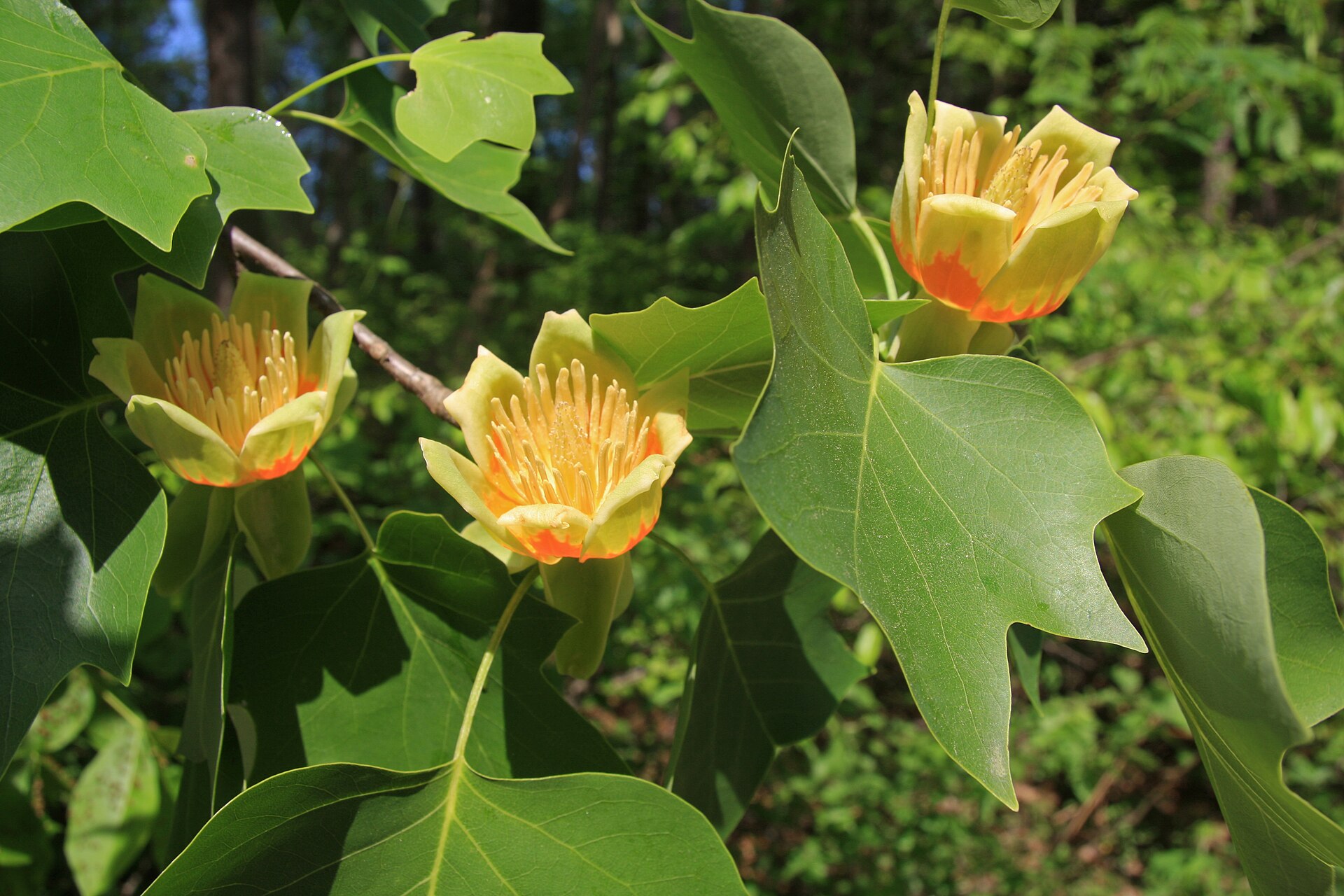
The tulip poplar is one of the tallest, straightest trees in Georgia’s forests, and it’s all over metro Atlanta’s older neighborhoods. In spring, it puts out big tulip-shaped flowers that most people never notice because they’re so high up. In summer, it’s often the tree dropping yellow leaves in the middle of July.
Here’s how to identify a tulip poplar, how big it gets and what problems to watch for if you have one near your home.
Tulip Tree vs. Tulip Poplar: Same Tree
Tulip tree, tulip poplar, yellow poplar and tuliptree are all names for the same species, Liriodendron tulipifera. Despite the name, it isn’t a true poplar at all. It’s a member of the magnolia family. Saucer magnolias are sometimes called “tulip trees” too, which adds to the confusion, but they’re a different, much smaller tree.
How to Identify a Tulip Poplar
- Leaves: very distinctive, 4 to 8 inches long, with four lobes and a flat or notched tip. The shape looks a lot like a tulip or a cat’s face.
- Flowers: cup-shaped, greenish yellow with orange markings, appearing in mid- to late spring
- Trunk: tall and very straight, often branch-free for a long way up
- Bark: light gray with interlacing ridges on mature trees
- Fall color: golden yellow
How Big and How Fast Do Tulip Poplars Grow?
According to the University of Florida’s tree fact sheet, tulip poplars typically grow 80 to 100 feet tall with a 30- to 50-foot spread. Growth is moderate to rapid when the tree is young on a good site, then slows with age. In the wild, they’re among the tallest hardwoods in the eastern United States.
That size is the main thing to plan for. A tulip poplar that seems a safe distance from the house at 20 years old can easily reach over the roof a couple of decades later.
Common Tulip Poplar Problems
Yellow leaves in summer
This is the most common question we get. When hot, dry weather sets in, tulip poplars often drop some of their interior leaves, which turn yellow first. UF’s fact sheet notes this is a reaction to drought, not a disease. Deep watering during long dry spells, especially for younger trees, helps.
Aphids, honeydew and sooty mold
Tuliptree aphids can build up in large numbers and drip sticky honeydew onto cars, patios and plants below. Black sooty mold then grows on the honeydew. It’s messy and annoying, but UF notes it does little permanent damage to the tree.
Large limbs over the house
Tulip poplar wood is fairly soft, and it’s sometimes blamed for storm damage, though UF notes the trees held up well during Hurricane Hugo. In practice, the bigger issue is sheer size. A large limb from a 90-foot tree can do serious damage to a roof, so dead branches and heavy limbs over the house should be dealt with promptly.
When Does a Tulip Poplar Need Attention?
- Large dead limbs in the canopy
- Cracks, cavities or fungus on the trunk
- Heavy limbs extending over the roof, driveway or play area
- A sudden lean or soil lifting at the base
- Thinning canopy or dieback that isn’t explained by drought
Often, trimming to remove dead wood and reduce weight over the house is all a healthy tulip poplar needs. If the tree is declining or simply too big for its spot, see our tree removal services, our tree removal cost guide and our tree trimming cost guide.
Tulip Poplar FAQs
Is a tulip tree the same as a tulip poplar?
Yes. Tulip tree, tulip poplar, yellow poplar and tuliptree are all names for Liriodendron tulipifera. Despite the name, it isn’t a true poplar. It’s in the magnolia family.
How fast do tulip poplars grow?
They grow moderately fast to fast when young on good sites and then slow down with age. They’re one of the tallest trees in eastern forests.
Why are my tulip poplar’s leaves turning yellow in summer?
Usually, it’s drought. The University of Florida notes that hot, dry weather can cause interior leaves to yellow and drop early. It’s a reaction to the weather, not a disease.
Why is there sticky stuff under my tulip poplar?
That’s honeydew from tuliptree aphids. Black sooty mold can grow on it. It’s annoying on cars and patios, but it rarely does lasting harm to the tree.
When do tulip poplars bloom?
In metro Atlanta, usually mid- to late spring. The tulip-shaped flowers are greenish yellow with orange markings and often sit high in the canopy, so many people never notice them.
Need Help With a Tree in Your Yard?
Avalon Tree Services is based in Lilburn and works throughout Gwinnett County and metro Atlanta. If you’re not sure whether a tree should stay or go, we’ll come take a look and give you an honest answer. Contact us or call 770-415-8581 for a free estimate.

Jose Roman is the owner of Avalon Tree Services and a member of the Georgia Green Industry Association (GGIA member #68916703). He leads the crews behind every tree removal, pruning job and storm cleanup we do across Gwinnett County and metro Atlanta, working out of our home base in Lilburn. Jose reviews the advice on this site so it lines up with what we actually see in Georgia yards: tall loblolly pines, aging water oaks and red clay that turns to mud after a week of rain.