Bradford Pear Trees: Why They Split, the Smell & When to Remove One
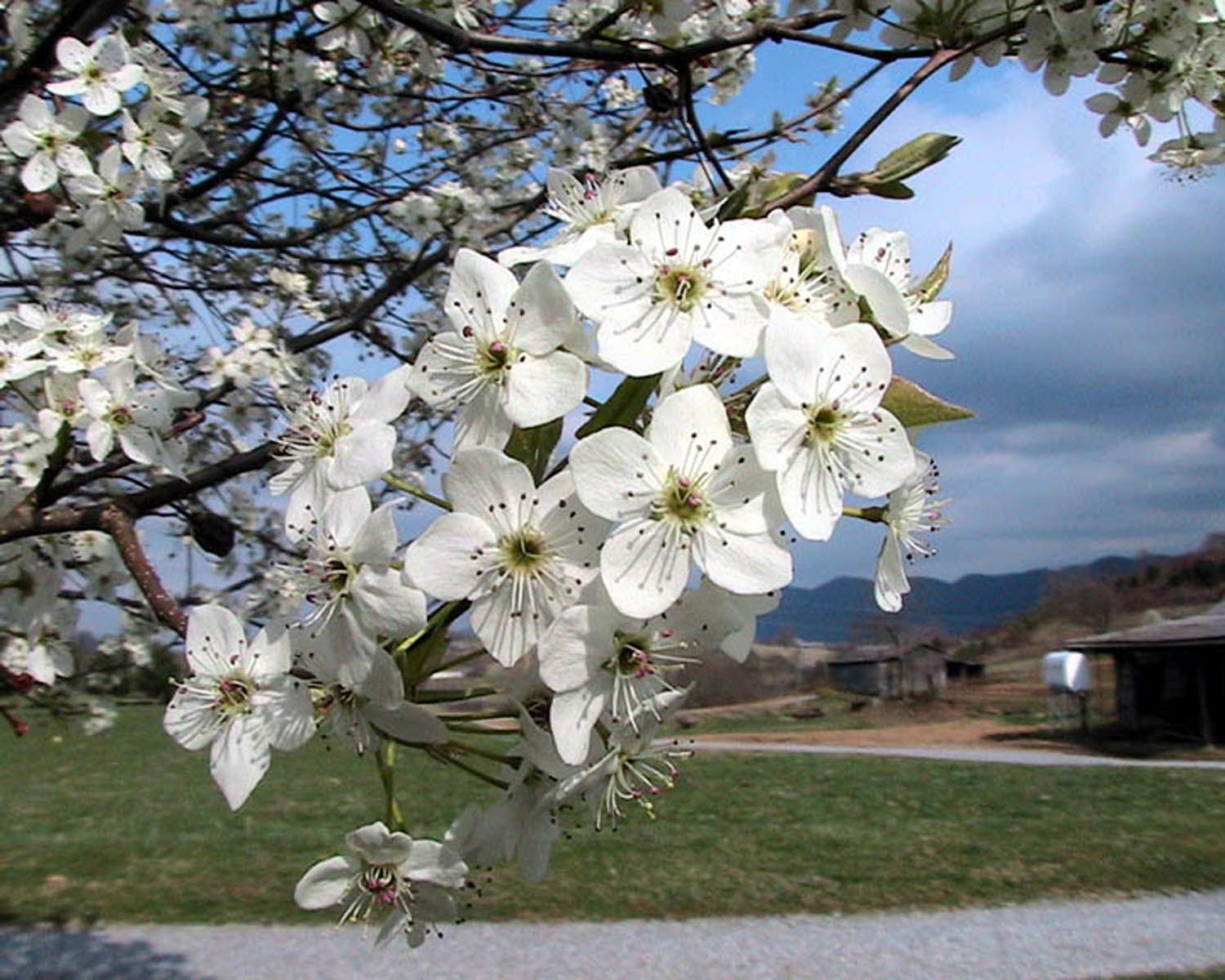
Every spring, Bradford pears light up yards and roadsides across metro Atlanta with clouds of white flowers. Then you get close and notice the smell. And sooner or later, a lot of homeowners walk outside after a storm to find half of their Bradford pear lying in the yard.
The Bradford pear was promoted in the 1960s as a fast-growing, easy ornamental tree. Today it’s one of the most common trees we’re asked to remove. Here’s why, and what to do about yours.
How to Identify a Bradford Pear
- Flowers: dense clusters of small white flowers in early spring, often before the leaves come out
- Shape: an upright, oval or teardrop-shaped crown with lots of branches growing straight up from the trunk
- Leaves: glossy, oval leaves with wavy edges that turn red, orange or purple late in the fall
- Fruit: tiny, hard, brownish fruit, usually less than half an inch across
Why Do Bradford Pear Trees Smell?
Bradford pear flowers have a strong odor that’s often compared to rotten fish. It’s strongest when the trees are in full bloom. UGA Extension notes the smell likely helps attract pollinators. Whatever the reason, it’s one of the first things people mention when they ask about removing one.
Why Do Bradford Pears Split?
This is the bigger problem. Bradford pears grow many branches that come off the trunk at narrow, upright angles. Those tight crotches make for weak attachments, and as the branches get heavier, they’re prone to tearing apart.
According to UGA Extension, Bradford pears easily split in storms and cold weather and often fail after 10 to 20 years. Ice is especially hard on them, since it collects in the narrow crotches. Mississippi State Extension puts the tree’s lifespan at about 25 years at most.
Splitting usually doesn’t happen gradually. A Bradford pear can look fine one day and lose a third of its canopy in the next thunderstorm, often onto a car, fence or roof.
Are Bradford Pears Invasive?
A Bradford pear on its own can’t pollinate itself. The problem is that Bradfords cross with other Callery pear varieties and with sprouts from the rootstock they’re grafted onto. The resulting fruit is eaten by birds and spread widely. The seedlings grow into thorny Callery pear thickets that take over fields, roadsides and forest edges, crowding out native plants. If you’ve noticed white-blooming trees lining the highways around Atlanta in March, many of those are escaped Callery pears.
Because of this, Ohio and South Carolina have banned the sale of Callery pears, including Bradfords. South Carolina’s ban took effect on October 1, 2024. Trees already planted in yards aren’t affected.
Should You Remove Your Bradford Pear?
In most cases, yes, especially if the tree is:
- Over 15 to 20 feet tall or more than about 10 years old
- Close to the house, driveway, fence or power lines
- Showing splits, cracks or missing limbs from past storms
- Producing thorny seedlings or suckers around the yard
Pruning can reduce the weight on a young tree and buy some time, but it can’t fix the tree’s basic structure. On an older Bradford, it usually makes more sense to take the tree down on your schedule than to clean it up after a storm. See our tree removal services and tree removal cost guide, and plan for stump grinding so the rootstock doesn’t send up new sprouts.
What to Plant Instead of a Bradford Pear
If you want a flowering tree in the same spot, UGA Extension suggests alternatives like:
- Eastern redbud, with pink-purple blooms in early spring
- Serviceberry, with white flowers and berries birds love
- Fringetree, with fluffy white blooms in late spring
- Dogwood, Georgia’s classic spring-flowering tree
- Crape myrtle, for summer color
Bradford Pear FAQs
Why do Bradford pear trees smell bad?
Bradford pear flowers have a strong odor that many people compare to rotting fish. It shows up every spring when the trees bloom.
Why do Bradford pears split?
Their branches grow upward at narrow angles from the trunk, which makes for weak attachments. UGA Extension notes they easily split in storms and ice and often fail after 10 to 20 years.
Are Bradford pears invasive?
A Bradford pear can’t pollinate itself, but it can cross with other Callery pear varieties and with rootstock sprouts. The fruit is spread by birds, and the seedlings form thorny thickets that crowd out native plants.
Are Bradford pears banned?
Ohio and South Carolina have banned the sale of Callery pears, including Bradford pears. South Carolina’s ban took effect October 1, 2024. Trees already in yards aren’t affected.
What should I plant instead of a Bradford pear?
UGA Extension suggests alternatives such as eastern redbud, serviceberry, fringetree, dogwood and crape myrtle.
Need Help With a Tree in Your Yard?
Avalon Tree Services is based in Lilburn and works throughout Gwinnett County and metro Atlanta. If you’re not sure whether a tree should stay or go, we’ll come take a look and give you an honest answer. Contact us or call 770-415-8581 for a free estimate.

Jose Roman is the owner of Avalon Tree Services and a member of the Georgia Green Industry Association (GGIA member #68916703). He leads the crews behind every tree removal, pruning job and storm cleanup we do across Gwinnett County and metro Atlanta, working out of our home base in Lilburn. Jose reviews the advice on this site so it lines up with what we actually see in Georgia yards: tall loblolly pines, aging water oaks and red clay that turns to mud after a week of rain.