Eco-Friendly Stump Removal Methods in Atlanta
Eco-Friendly Stump Removal Methods in Atlanta: Sustainable Solutions for Property Owners
Eco-friendly stump removal blends mechanical and biological approaches to remove or neutralize tree stumps while protecting soil health, avoiding herbicides, and recycling wood byproducts for on-site use. This article explains sustainable stump grinding, natural stump decomposition, and manual stump extraction so Atlanta property owners can choose methods that minimize environmental impact and restore landscapes efficiently. Many homeowners and property managers face hazards like trip risks, pest attraction, and poor drainage from leftover stumps; sustainable methods reduce these problems while preserving soil microbes and offering mulch for landscaping. You will learn how each method works, the trade-offs in time and cost, practical step-by-step actions to accelerate natural decay without chemicals, and clear decision criteria for Atlanta sites. The guide also compares eco-friendly options in a concise table, lists tools and safety steps, and shows how Avalon Tree Services approaches sustainable stump grinding and free estimates for local properties.
Why Choose Eco-Friendly Stump Removal in Atlanta?
Eco-friendly stump removal protects soil biology, reduces chemical runoff, and turns wood waste into useful mulch, producing clearer, safer yards and healthier planting beds. The approach works by favoring mechanical or biological techniques over herbicidal killers, preserving beneficial fungi and microbes in Atlanta’s soils while preventing leaching into stormwater. Choosing green methods also lowers long-term pest and pathogen risks that can arise when stumps are left to rot unchecked, and it creates landscape-ready sites more quickly than untreated decay in many cases. Property owners gain aesthetic, safety, and ecological benefits that support healthier trees nearby and better stormwater absorption, which is particularly valuable for Atlanta’s urban and suburban lots.
This section highlights the top environmental and property-level advantages of green stump removal:
- Soil Health Preservation: Minimizes chemical exposure and preserves beneficial microbes and fungi.
- Wood Reuse: Recycles wood chips as mulch to conserve moisture and add nutrients to planting beds.
- Pest and Disease Reduction: Removes habitats that attract ants, termites, and fungal pathogens.
These benefits help homeowners and managers decide whether an eco-friendly approach aligns with landscape goals and long-term site health.
What Are the Environmental Benefits of Green Stump Removal?
Green stump removal reduces chemical inputs and promotes nutrient cycling by returning chipped wood to the soil surface as mulch, which slowly releases organic matter and supports microbial communities. By avoiding herbicides, this approach protects beneficial soil organisms and nearby plants, helping trees and shrubs recover without toxic exposure. Wood chips also moderate soil temperature and moisture, improving conditions for new plantings and reducing irrigation needs in Atlanta’s warm climate. Practical homeowner tips include saving chips for planting beds, aerating compacted soil around the stump site, and using compost teas or organic matter to speed biological recovery after removal.
These ecological gains naturally lead to considerations about safety and property value when stumps are removed responsibly.
How Does Eco-Friendly Removal Improve Safety and Property Value?
Removing stumps using sustainable methods eliminates trip hazards, opens lawn and hardscape areas for landscaping, and reduces hiding places for pests and small mammals that can damage yards or structures. Clean, mulched sites improve curb appeal and make properties easier to sell or lease, while also lowering liability from accidental falls on uneven ground. For commercial frontages in Atlanta, improved presentation and accessible grounds can influence visitor impressions and property usability.
A practical homeowner checklist includes:
- Checking stump proximity to walkways
- Evaluating pest signs
- Planning mulched replanting to quickly reclaim the space
This focus on safety and value informs the choice of methods described next, where environmental trade-offs and practical mechanics are compared.
What Are the Main Eco-Friendly Stump Removal Methods Used in Atlanta?
Eco-friendly stump removal in Atlanta generally uses three methods: sustainable stump grinding, natural stump decomposition, and manual stump removal, each offering distinct timeframes, costs, and site outcomes. Stump grinding mechanically reduces the stump to chips for reuse, natural decomposition uses biological processes and organic accelerants to break down wood over months to years, and manual removal extracts the stump and roots by hand or with minimal machinery when access or sensitivity requires it. Choosing among these depends on stump size, location, desired timeline, and whether the property owner prefers on-site wood recycling or complete root extraction.
This comparison highlights that grinding is fast and resource-efficient, decomposition is the gentlest ecologically, and manual extraction suits sensitive or confined sites.
How Does Sustainable Stump Grinding Work and Why Is It Eco-Friendly?
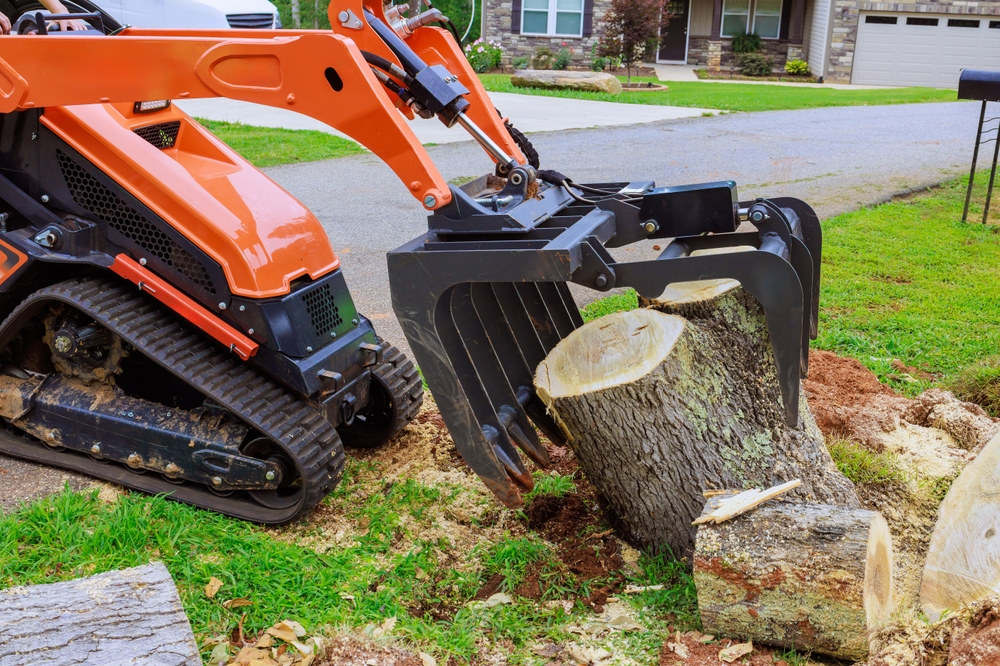
Sustainable stump grinding uses a rotating cutting wheel to reduce the visible stump and upper roots into wood chips, leaving the root network to decay naturally while avoiding herbicides. Operators grind to a depth that allows replanting or topsoil replacement, and responsible crews collect or distribute chips on-site to serve as mulch that conserves moisture and feeds soil life.
Sustainable grinding reduces heavy soil disruption compared with full excavation, and by reusing chips it diverts organic waste from landfills while restoring planting beds. For Atlanta property owners interested in this eco-positive option, Avalon Tree Services practices sustainable grinding and wood-chip recycling and can schedule eco-friendly grinding and site recovery; contact them to request an assessment and free estimate to discuss options that can help get more customers for commercial properties through improved curb appeal.
What Is Natural Stump Decomposition and How Does It Avoid Chemicals?
Natural stump decomposition accelerates wood breakdown by increasing surface exposure, drilling holes to introduce moisture and oxygen, and adding organic accelerants like compost or nitrogenous materials to fuel microbial activity—without using chemical herbicides. Typical steps include removing soil and bark to expose the stump, applying high-nitrogen compost or aged manure around the base, and covering with a moist mulch to retain moisture; fungi and bacteria then colonize and gradually decompose the wood over months to years. This method is best for small to medium stumps where time is acceptable and minimal disturbance is desired, and it enhances soil organic matter as the stump turns to humus.
For sites requiring faster reclamation, mechanical grinding remains the quicker eco-friendly choice.
When Is Manual Stump Removal the Best Eco-Friendly Option?
Manual stump removal is the preferred eco-friendly option for small stumps, tight-access locations, or environmentally sensitive areas where heavy machinery would cause unacceptable disturbance. The method removes both above-ground stump and major roots using hand tools, winches, or light mechanical aids so the site can be replanted without the long decay period, and it avoids chemical treatments entirely. Manual extraction is labor-intensive and slower per stump than grinding, but it minimizes noise, heavy soil displacement, and equipment emissions on compact sites. Property owners choosing manual removal should weigh labor and time against the benefit of immediate root removal and low ecological impact.
What Tools and Techniques Are Used for Chemical-Free Manual Removal?
Effective manual removal relies on sturdy hand tools—shovels, mattocks, pruning saws, and digging bars—augmented by winches or come-alongs for larger stumps to leverage root removal without heavy machinery. Safety gear such as gloves, eye protection, and steel-toe boots reduces injury risk.
Sequential steps typically include:
- Trenching around the stump
- Cutting exposed roots
- Using leverage to roll or lift the stump from its socket
For particularly large root systems, sectional root cutting and staged pulling reduce soil upheaval while allowing gradual extraction. Homeowners should know when to call professionals for complex root systems or when trees are near structures to avoid damage.
What Are the Benefits and Limitations of Manual Stump Removal?
Manual removal offers clear environmental benefits: no chemicals, minimal heavy equipment, and the ability to selectively remove roots close to structures or utilities while preserving surrounding soil and plants. Limitations include higher labor costs, longer project time, and reduced feasibility on large-diameter stumps with deep, extensive root systems. Use manual removal when access is restricted, when preserving neighboring plants is critical, or when homeowners prefer immediate root removal for landscaping plans. For larger or multiple stumps, mechanical grinding often provides a more time- and cost-efficient eco-friendly alternative.
How Much Does Eco-Friendly Stump Removal Cost in Atlanta and What to Expect?
Costs for eco-friendly stump removal vary primarily by stump diameter, root complexity, site accessibility, and chosen method, with grinding usually priced per stump or inch of diameter and manual or natural decomposition priced more on labor or time. Additional cost factors include whether wood chips are hauled away or reused on-site, whether deep grinding or full extraction is required, and any necessary site restoration work such as topsoil replacement and reseeding. Typical service visits include an on-site assessment, method recommendation, grinding or removal, chip distribution or removal, and basic cleanup to leave the site ready for replanting. To arrange a clear, no-obligation assessment and free estimate, property owners can contact Avalon Tree Services; their local crew evaluates stump size, root condition, and access, then outlines eco-friendly options and expected price ranges so owners can make informed decisions to get more customers for commercial properties through improved site presentation.
This table clarifies where costs rise and where homeowners can save by choosing on-site recycling and accessible locations.
What Factors Influence Pricing for Sustainable Stump Removal Services?
Key pricing drivers include stump diameter and root spread, which determine grinding time or manual labor; access constraints that lengthen work time; disposal preferences for chips; and any required site rehabilitation like filling and reseeding. Local Atlanta conditions such as compacted urban soils or limited driveway access can increase labor requirements and therefore cost. Property owners can lower costs by opting to reuse wood chips as mulch and by providing clear access for equipment. Understanding these factors helps set realistic expectations before a crew arrives and frames the free estimate conversation.
How Can Property Owners Get Free Estimates from Avalon Tree Services?
Avalon Tree Services offers on-site assessments where an experienced arborist evaluates stump size, root patterns, and access constraints to recommend eco-friendly options and provide a free estimate that outlines the proposed method, expected timeline, and whether chips will be reused or removed. During the estimate, the team explains mechanical grinding depth options, manual extraction feasibility, and natural decomposition suitability so clients can choose the best balance of speed, cost, and environmental impact. Property owners should prepare by noting stump locations, measuring approximate diameter, and identifying nearby structures or utilities to speed evaluation. For Atlanta properties seeking sustainable stump removal and site restoration, requesting a free estimate from Avalon Tree Services is the recommended next step to get a clear plan and pricing that reflects eco-friendly priorities and local conditions.