How to Save a Dying Tree Before It Becomes a Safety Hazard
How to Save a Dying Tree Before It Becomes a Safety Hazard
Healthy trees add beauty, shade, and value to your property, but when a tree starts declining, many homeowners are unsure what to do next. In Atlanta, changing weather conditions, pests, disease, and poor soil health can all contribute to trees becoming stressed or unhealthy over time.
The good news is that not every struggling tree needs to be removed. In many cases, early intervention and proper tree care can help restore tree health before the problem becomes severe.
Understanding the warning signs and taking action quickly can make the difference between saving a tree and losing it completely.
Common Signs a Tree May Be Dying
Trees often show visible signs of stress long before they fully die. Catching these issues early gives the tree a much better chance of recovery.
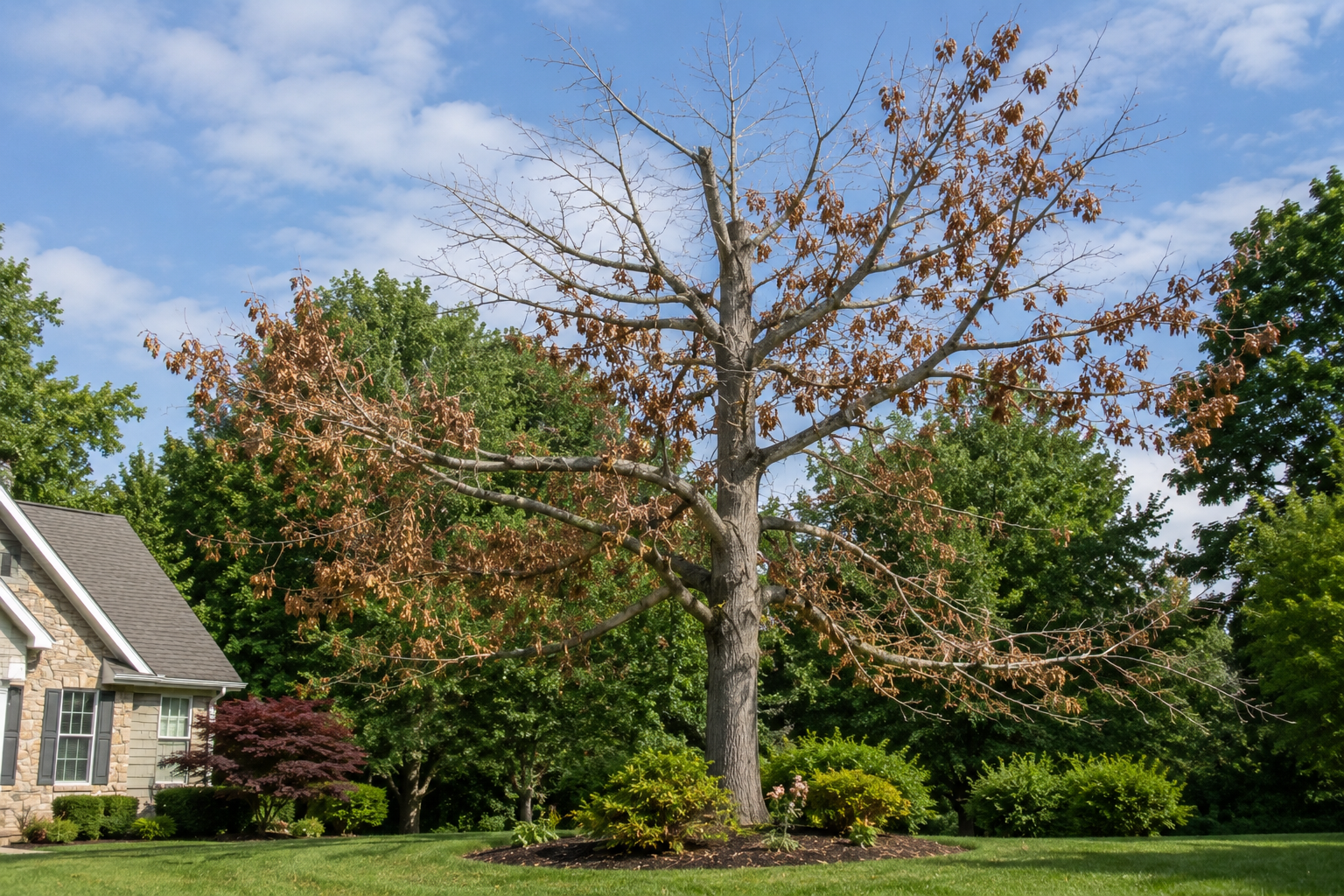
Leaves Are Discolored or Falling Early
If your tree’s leaves are turning brown, yellow, or dropping outside the normal seasonal cycle, it may be under stress.
This can be caused by:
- Disease
- Root damage
- Poor watering
- Nutrient deficiencies
- Pest infestations
Dead or Brittle Branches
Dead branches are one of the most common warning signs of decline. If branches snap easily or fail to produce leaves during growing season, the tree may be struggling internally.
Cracked or Peeling Bark
Healthy bark protects the tree from disease and insects. When bark begins cracking, splitting, or peeling away, it can indicate internal decay or disease.
Leaning or Structural Changes
A tree that suddenly begins leaning or develops uneven growth may have root damage or structural instability.
This can become especially dangerous during Atlanta’s storm season.
Fungi Growing Near the Base
Mushrooms or fungal growth around the roots or trunk often indicate rot inside the tree.
While not always fatal, fungal growth should never be ignored.
What Causes Trees to Decline in Atlanta?
Atlanta’s climate presents several challenges for tree health, including:
- Heavy rain and storm damage
- High summer heat
- Soil compaction
- Root stress from construction
- Insects and disease
- Drought conditions
- Improper pruning
Mature trees in residential neighborhoods are particularly vulnerable when they are not maintained properly over time.
Steps That May Help Save a Dying Tree
Improve Watering Habits
Both overwatering and underwatering can damage trees.
Trees generally benefit from:
- Deep watering
- Consistent moisture
- Proper drainage
- Mulching around the base
Avoid watering directly against the trunk, as this can contribute to rot.
Prune Dead or Diseased Branches
Removing unhealthy limbs can help redirect nutrients to healthy growth and reduce safety risks.
However, improper pruning can worsen tree stress, which is why professional tree care services are recommended.
Fertilize the Tree Properly
Trees lacking nutrients may benefit from professional fertilization treatments.
A tree care specialist can evaluate soil conditions and recommend the proper nutrients based on the species and condition of the tree.
Address Pest or Disease Issues
Insects and disease can spread quickly if left untreated.
Professional tree care companies can identify:
- Fungal infections
- Root diseases
- Boring insects
- Leaf diseases
- Structural decay
Early treatment is often the key to saving the tree.
Reduce Soil Compaction
Heavy foot traffic, vehicles, and construction equipment can compact soil around roots, limiting oxygen and water absorption.
Aeration and proper soil management can help improve root health.
When Professional Tree Care Is Necessary
Homeowners can handle basic maintenance, but some situations require professional evaluation immediately.
You should schedule a professional tree inspection if:
- Large limbs are dying
- The tree is leaning
- The trunk has cracks or cavities
- Fungi are spreading
- The tree is close to your home
- Storm damage is visible
Ignoring these signs can eventually turn a tree care issue into a dangerous tree removal emergency.
Why Professional Tree Care Matters
Professional tree care helps protect both your trees and your property. Proper maintenance not only improves tree health but can also extend the life of mature trees for many years.
Professional tree care services can include:
- Tree inspections
- Disease diagnosis
- Structural pruning
- Soil treatments
- Tree fertilization
- Preventative maintenance
Avalon Tree Services provides professional tree care services throughout Atlanta to help homeowners preserve healthy trees and identify problems before they become serious hazards.
Can Every Dying Tree Be Saved?
Unfortunately, not every tree can recover. In some cases, disease, rot, or structural damage may be too severe.
If a tree becomes unsafe, professional tree removal may be the best option to protect your property and prevent future damage.
A qualified tree care expert can help determine the safest and most cost-effective solution.
Frequently Asked Questions
- How do I know if my tree is dying or just stressed?
A stressed tree may still recover with proper care, while a dying tree often shows severe decay, dead branches, or structural issues. A professional inspection is the best way to know for sure.
- Can overwatering kill a tree?
Yes. Excess moisture can lead to root rot and fungal disease.
- Is pruning enough to save a dying tree?
Sometimes, but underlying issues such as disease or root damage may also need treatment.
- How often should trees be inspected?
Most mature trees benefit from professional inspections every 1–3 years, especially before storm season.
Schedule Professional Tree Care in Atlanta
If your tree is showing signs of decline, early action can make a major difference. Professional care and maintenance may help restore tree health, improve safety, and protect the value of your property.
Avalon Tree Services proudly provides expert tree care services throughout the Atlanta area. From tree inspections and pruning to long-term tree health management, our experienced team is here to help keep your trees healthy and your property protected.
Contact Avalon Tree Services today to schedule a professional tree care inspection.