How to Tell if a Tree Is Dead and When It Needs to Be Removed
How to Tell if a Tree Is Dead and When It Needs to Be Removed
Trees add beauty, shade, and value to your property, but when a tree becomes unhealthy or dies, it can quickly turn into a serious hazard. In Atlanta, storms, disease, drought, and aging trees can all contribute to tree decline. Knowing how to identify a dead tree early can help prevent costly property damage and dangerous situations.
If you suspect a tree on your property may be dead, there are several warning signs homeowners should never ignore.
Why Dead Trees Are Dangerous
A dead tree is structurally weak and unpredictable. As the wood begins to decay, branches can fall without warning, trunks can split, and entire trees can collapse during storms or high winds.
Dead trees can lead to:
- Damage to homes, vehicles, and fences
- Injury to people or pets
- Blocked driveways and access points
- Power line hazards
- Expensive emergency cleanup
This is why dead tree removal in Atlanta is an important part of protecting your property and maintaining safety.
Common Signs a Tree May Be Dead
- The Tree Has No Leaves During Growing Season
One of the most obvious signs is a tree that remains bare while surrounding trees are full of healthy leaves. While some trees naturally bloom later than others, complete lack of foliage during the growing season is often a warning sign.
- Brittle or Falling Branches
Dead branches become dry and brittle. If large limbs are snapping off easily or falling into your yard, the tree may no longer be healthy.
Branches without flexibility usually indicate internal decay or lack of moisture flow throughout the tree.
- Bark Is Falling Off
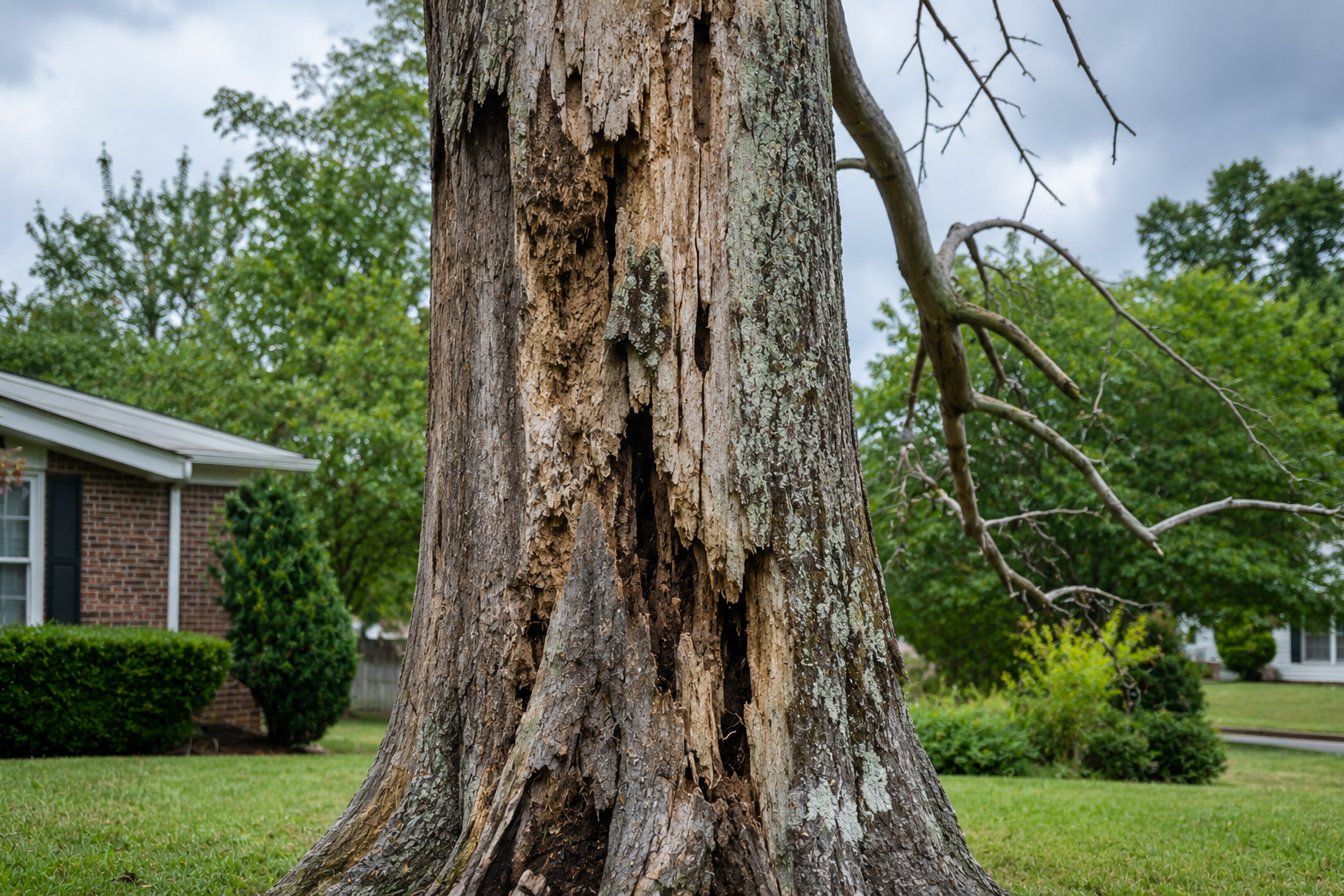
Healthy trees continuously regenerate bark. When bark starts peeling, cracking, or falling off in large sections, it may indicate the tree is dying internally.
Exposed wood underneath the bark is often vulnerable to insects, disease, and rot.
- The Trunk Shows Cracks or Decay
Large vertical cracks, hollow sections, or visible decay in the trunk are serious warning signs.
Fungi or mushrooms growing near the base of the tree can also indicate internal rot and root decay.
- The Tree Is Leaning Suddenly
A tree that suddenly begins leaning after storms or heavy rain could have root damage or structural instability.
In many cases, leaning trees become emergency hazards that require immediate professional attention.
Scratch Test: A Simple Way to Check Tree Health
One quick way homeowners can check a tree is by performing a scratch test.
Using a small knife or fingernail, lightly scratch a small section of bark on a younger branch.
- Green underneath usually means the branch is alive
- Brown and dry underneath may indicate the branch is dead
While this can help identify issues, professional inspections are still the best way to determine overall tree health.
What Causes Trees to Die in Atlanta?
Atlanta’s climate and weather conditions create several common tree stress factors, including:
- Severe thunderstorms and wind damage
- Excess moisture and root rot
- Drought conditions
- Pest infestations
- Tree diseases
- Construction damage near roots
- Aging trees
Mature trees throughout Atlanta neighborhoods are especially vulnerable during storm season.
When Should a Dead Tree Be Removed?
You should contact a professional tree removal company if:
- The tree is near your home
- Large limbs are falling
- The trunk is hollow or splitting
- The tree is leaning
- Branches are hanging over structures or vehicles
- The tree appears completely dead
Waiting too long can turn a manageable removal into an emergency situation.
Why Professional Tree Removal Matters
Removing a dead tree is dangerous work that requires specialized equipment, experience, and safety procedures.
Professional tree removal services help ensure:
- Safe removal without property damage
- Proper handling of unstable trees
- Efficient cleanup and debris removal
- Reduced liability risks
Avalon Tree Services provides professional tree removal services throughout Atlanta to help homeowners safely remove hazardous and dead trees before they become larger problems.
Frequently Asked Questions
- Can a dead tree fall on its own?
Yes. Dead trees can become unstable and collapse without warning, especially during storms or high winds.
- Is a tree dead if only some branches have leaves?
Not always. Partial leaf growth can indicate disease or stress, but it may still be salvageable depending on the condition.
- Should I remove a dead tree immediately?
If the tree poses a safety risk or is close to structures, immediate removal is strongly recommended.
- Can dead trees attract pests?
Yes. Dead trees often attract termites, carpenter ants, beetles, and other wood-boring insects.
Schedule a Professional Tree Inspection in Atlanta
If you think a tree on your property may be dead, it’s important to act before it becomes a safety hazard. Early detection and professional evaluation can help prevent expensive damage and dangerous situations.
Avalon Tree Services proudly provides reliable tree removal and hazardous tree services throughout the Atlanta area. Whether you need a professional inspection or complete tree removal, our experienced team is ready to help.
Contact Avalon Tree Services today to schedule a tree assessment and protect your property from dangerous dead trees.