Sweetgum Trees: Gumballs, Roots & When to Remove One
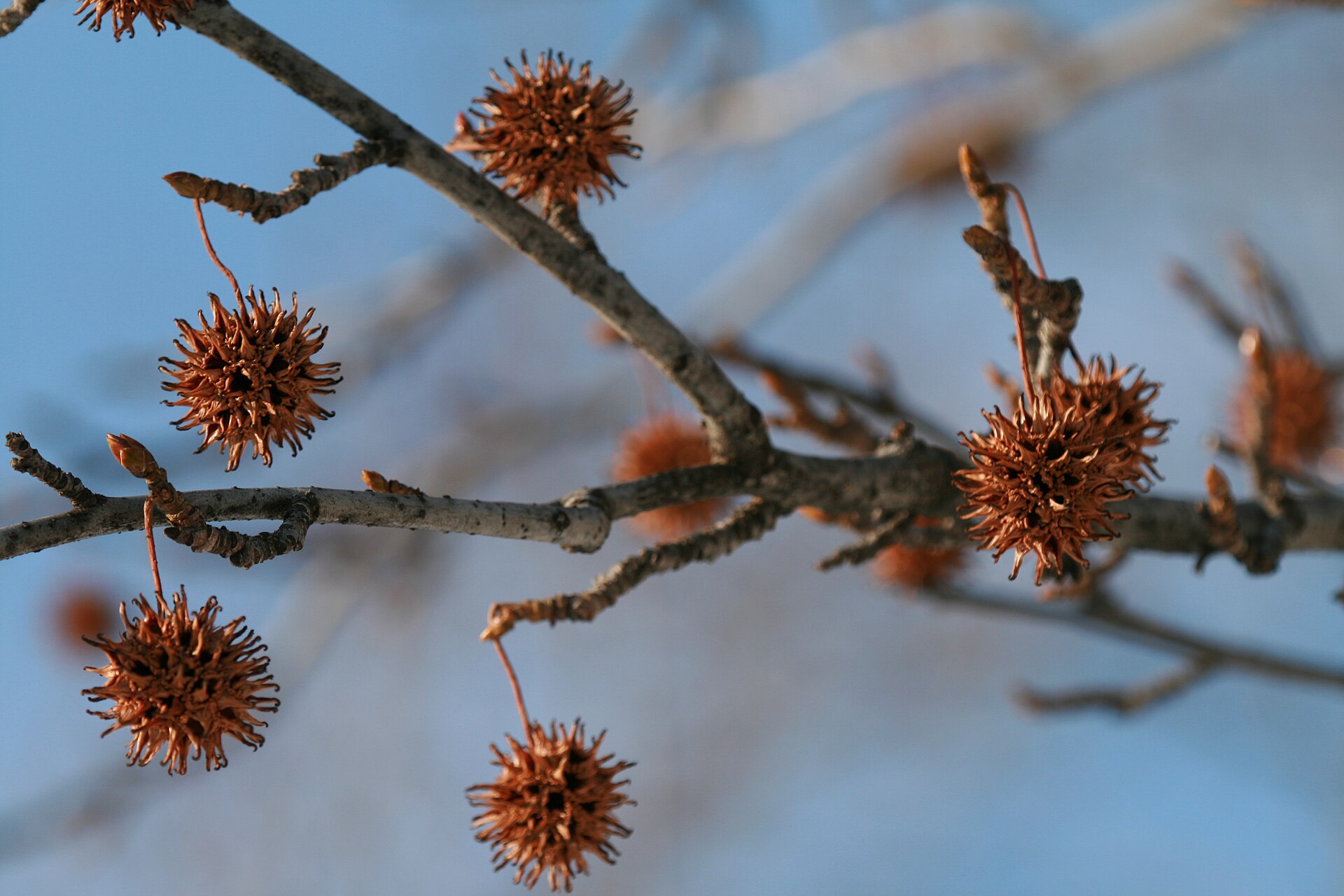
If you’ve ever stepped on one of those spiky little balls in your yard and rolled an ankle, you’ve met the sweetgum tree. Sweetgums are everywhere in Gwinnett County and metro Atlanta. They’re native to the Southeast, they grow fast and they give you some of the best fall color around. They also drop gumballs for months and send roots under sidewalks.
Here’s how to identify a sweetgum, what problems they cause and how to decide whether to keep yours or have it removed.
How to Identify a Sweetgum Tree
- Leaves: star-shaped, usually with five pointed lobes, dark green and shiny on top. In fall they turn bright red, purple, yellow or orange, often all on the same tree.
- Seed balls: round, brown, spiky clusters about an inch across. These are the “gumballs” that give the tree its reputation.
- Bark and twigs: grayish-brown, deeply furrowed bark on older trees. Younger twigs sometimes have corky ridges.
- Shape: a narrow, pyramid-shaped crown when young that rounds out with age.
According to the University of Florida’s tree fact sheet, sweetgums usually reach 60 to 75 feet tall with a 35- to 50-foot spread, and older trees can get bigger than that.
Common Sweetgum Problems
The gumballs
This is the number one complaint. The seed balls drop from fall through spring, and a mature tree can produce thousands of them. They’re hard to rake, they jam up mowers, and on driveways and patios they’re a real slipping hazard. UF’s fact sheet specifically calls out the fruit and leaves as a litter problem on hard surfaces.
Aggressive roots
Sweetgum roots are large and aggressive. Extension experts note they can lift curbs and sidewalks and recommend planting the trees at least 8 to 10 feet from paved areas. In a lot of Atlanta subdivisions, sweetgums were left standing right next to driveways, and those roots are now cracking concrete.
Pests and disease
Sweetgums are fairly tough, but they can get scale insects, bagworms, fall webworms and canker diseases. Cankers can kill severely infected trees, so a sweetgum with sunken, oozing patches on the trunk or dying branches is worth having inspected.
Can You Stop the Gumballs?
There are a few options, none of them perfect:
- Plant a fruitless variety. The cultivar ‘Rotundiloba’ doesn’t produce gumballs. It’s the best choice if you love sweetgums but not the mess.
- Growth regulator sprays. Some tree care companies apply a product during flowering to reduce fruit. The timing is tricky, it has to be done every year, and it rarely stops all the balls.
- Clean-up tools. Rolling nut gatherers work better than rakes for picking up gumballs.
- Remove the tree. If the tree is close to the house, over a driveway or pool, or the roots are damaging concrete, removal is often the long-term fix.
Should You Remove Your Sweetgum Tree?
A healthy sweetgum in an open part of the yard is usually worth keeping. It’s a native tree that provides shade and wildlife food. Removal makes more sense when:
- Roots are lifting or cracking the driveway, sidewalk, patio or foundation
- The tree hangs over the roof, pool or play area, where gumballs and limbs cause constant problems
- The tree is dying, has large dead limbs or shows signs of canker or decay
- It’s growing too close to the house for its mature size
If you’re on the fence, regular tree trimming can lift the canopy, clear the roof and reduce some of the mess over hard surfaces. For a tree that’s past saving, see our tree removal services.
What Does Sweetgum Removal Cost?
Price mostly comes down to the tree’s height, how close it is to the house and how easy it is to get to. A mid-sized sweetgum in an open front yard is a fairly simple job. A 70-foot sweetgum over a house in a fenced backyard is not. See our tree removal cost guide for typical ranges. And since sweetgum roots are a big part of the problem, plan for stump grinding too.
Sweetgum Tree FAQs
How tall do sweetgum trees get?
According to the University of Florida’s tree fact sheet, sweetgums typically reach 60 to 75 feet tall with a 35- to 50-foot spread. Older trees in good soil can grow taller.
When do sweetgum balls fall?
The spiky seed balls ripen in fall and keep dropping through winter and into spring, which is why they seem to show up in the yard for months.
Is there a sweetgum tree without balls?
Yes. The cultivar ‘Rotundiloba’ is fruitless, so it doesn’t produce gumballs. It also has rounded leaf tips instead of pointed ones.
Are sweetgum roots a problem?
They can be. Sweetgum roots are large and aggressive and can lift sidewalks, curbs and driveways. Extension experts recommend planting them at least 8 to 10 feet from paved surfaces.
Should I cut down my sweetgum tree?
Not necessarily. A healthy sweetgum provides shade and great fall color. Removal makes sense when roots are damaging hardscape, the tree is declining, or it’s too close to the house.
Need Help With a Tree in Your Yard?
Avalon Tree Services is based in Lilburn and works throughout Gwinnett County and metro Atlanta. If you’re not sure whether a tree should stay or go, we’ll come take a look and give you an honest answer. Contact us or call 770-415-8581 for a free estimate.

Jose Roman is the owner of Avalon Tree Services and a member of the Georgia Green Industry Association (GGIA member #68916703). He leads the crews behind every tree removal, pruning job and storm cleanup we do across Gwinnett County and metro Atlanta, working out of our home base in Lilburn. Jose reviews the advice on this site so it lines up with what we actually see in Georgia yards: tall loblolly pines, aging water oaks and red clay that turns to mud after a week of rain.