
Best Time to Trim Trees in Georgia: An Atlanta Seasonal Guide
Severe storms rolled through metro Atlanta again and again this summer, snapping limbs and dropping trees on homes, cars and power lines across Gwinnett, Fulton and DeKalb counties. Now that the weather is cooling off, many homeowners are asking the same question: when is the best time to trim trees in Georgia so they are ready for next year?
The short answer is the dormant season, from late fall through February. But some trees in your yard need different timing, and a dangerous limb should never wait for the calendar. This guide explains when to prune trees in the Atlanta area, season by season and species by species.
The Best Time to Trim Trees in Georgia Is the Dormant Season
For most shade trees in metro Atlanta, the best time of year to trim trees is while they are dormant. University of Georgia Extension experts recommend doing major pruning in winter, and UGA Extension agents note that most trees go fully dormant after a hard frost below 28 degrees. In our area, January and February are usually the ideal months, with all major pruning wrapped up by mid-March.
Late October and November are the right time to plan that work. Once the leaves drop, it is much easier to see dead wood, crossing branches and weak limbs that could fail in a storm.
Why Dormant Pruning Works So Well in Metro Atlanta
Dormant pruning gives your trees the best chance to recover quickly and grow back strong. Here is why:
- Less stress on the tree. A dormant tree has already stored its energy in its trunk and roots, so removing branches doesn’t take away food it needs.
- Lower risk of pests and disease. Many insects and fungi are inactive in cold weather, so fresh cuts are less likely to become an entry point.
- A clear view of the canopy. Without leaves, an arborist can see the tree’s full structure and make better cuts.
- Faster wound closure in spring. Cuts made in late winter begin sealing as soon as new growth starts.
- Less impact on your yard. Dormant lawns and garden beds handle equipment and foot traffic better than they do in the growing season.
Not sure whether your trees need a light trim or a deeper structural prune? Our guide to tree trimming vs. pruning explains the difference.
When to Prune Trees in Georgia, Season by Season
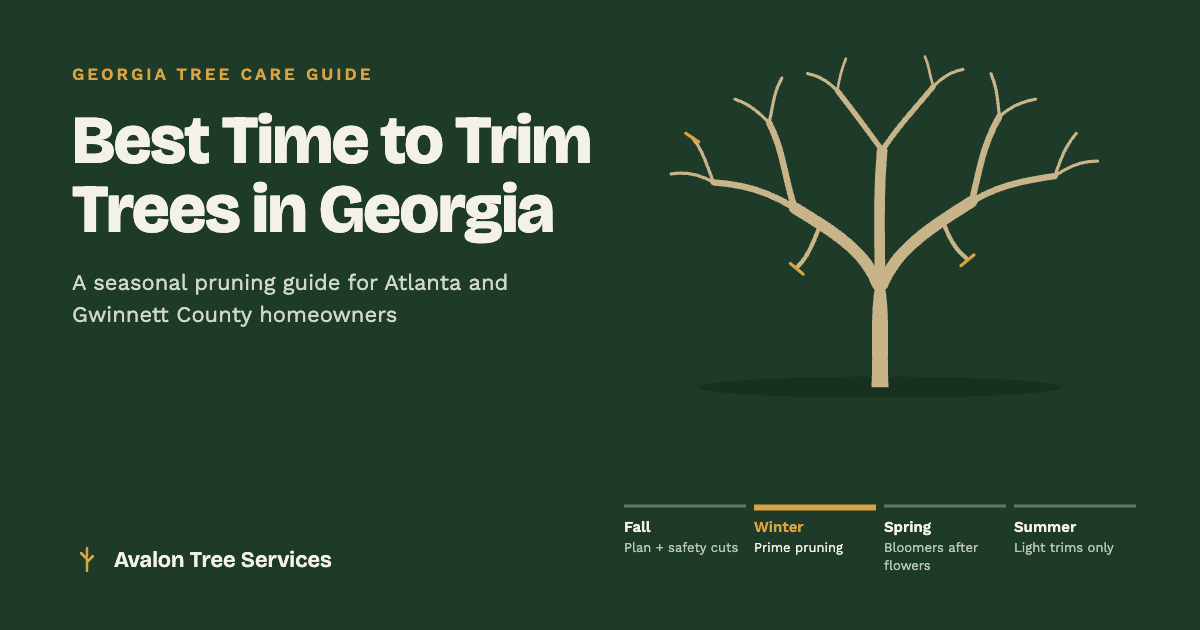
Fall (October and November)
Fall is the season to inspect, plan and handle safety work. Remove dead, broken or hanging limbs and branches resting on your roof before winter weather arrives. Hurricane season runs through November 30, and a tropical system can still bring strong winds to North Georgia this time of year. Hold off on heavy pruning until after a hard frost, because big cuts during a warm spell can trigger new growth that won’t harden before winter.
Winter (December through February)
This is prime time for structural pruning, crown thinning, raising low limbs over driveways and sidewalks, and pruning summer-flowering trees like crape myrtles. Booking in late fall gets your trees on the schedule before the dormant-season rush.
Spring (March through May)
Finish major pruning by mid-March, before trees leaf out. Spring-flowering trees and shrubs such as dogwoods, redbuds and azaleas are the exception: prune them just after their blooms fade so you don’t cut off next year’s flower buds.
Summer (June through September)
Stick to light corrective trimming in summer, such as clearing a walkway or removing a branch that rubs against the house. Storm-damaged limbs should be handled right away, no matter the month.
Best Time of Year to Trim Trees by Species
Common trees in Atlanta and Gwinnett County yards each have their own timing:
- Oaks: Prune in the dormant season. The best time to prune oak trees is winter, and pruning in spring is best avoided.
- Maples: Prune while dormant. Maples may drip sap from late-winter cuts, which looks alarming but is usually harmless.
- Dogwoods and redbuds: Prune right after flowering, since they set next year’s buds in summer and fall.
- Crape myrtles: Prune in January or February, and only if needed. Avoid cutting them back to stubs, a practice often called “crape murder” that leads to weak sprouts and suckers.
- Pines: Remove dead or damaged limbs as needed, but avoid severe pruning, since pines don’t recover well from heavy cuts.
- Fruit trees: Prune peaches, apples and pears in late winter, around February.
When You Shouldn’t Wait: Trim for Safety Any Time
Timing guidelines are about tree health, but safety always comes first. Call a professional right away if you see:
- Dead, cracked or hanging limbs over your home, driveway or play area
- Branches touching your roof or siding (we recommend about 10 feet of clearance above the roof)
- Limbs growing into power lines, which only trained crews should handle
- A tree that has started to lean, or new cracks or mushrooms near the base
- Damage left behind after a storm
Our storm damage tree services team can clear broken limbs quickly, and a professional tree risk assessment can tell you whether a tree with warning signs can be saved.
Pruning Tips That Protect Your Trees
- Cut just outside the branch collar. The slightly swollen area where a branch meets the trunk helps the tree seal the wound. Don’t cut flush with the trunk.
- Use the three-cut method on large limbs. Make a shallow undercut first, then cut from the top to remove the limb, then make the final cut at the collar. This keeps the bark from tearing.
- Skip the wound paint. UGA Extension notes that pruning sealers don’t meaningfully stop insects or disease and can slow the tree’s natural healing.
- Never top a tree. Cutting the top off a tree leads to weak, fast-growing sprouts that are more likely to break in the next storm.
- Keep your tools sharp and clean. Clean cuts heal faster than ragged ones.
Large trees, high limbs and anything near the house are best left to a crew with the right equipment. Our professional tree trimming in Atlanta covers everything from crown thinning to clearance pruning.
Frequently Asked Questions
Is it okay to trim trees in October?
Yes, for light work. October is a good month to remove dead, broken or hanging limbs and to clear branches away from your roof before winter weather. Save heavy pruning for after a hard frost, because large cuts made during a warm fall stretch can push out tender new growth that gets damaged by the first freeze.
When is the best time to prune oak trees?
The best time to prune oak trees in Georgia is during the dormant season, from late fall through February. Avoid pruning oaks in spring when fresh cuts are most attractive to insects that can carry disease. Dead or dangerous oak limbs can be removed any time.
When should you not cut tree branches?
Avoid major pruning during spring leaf-out and right before a hard frost, and don’t prune spring-flowering trees like dogwoods in winter or you will cut off this year’s blooms. Never remove a branch that touches a power line yourself; call your utility provider and a professional tree service.
Is there a best time to cut down a tree?
Late fall and winter are often the easiest time to remove a tree because the leaves are off, the tree is lighter and lawns and gardens are dormant. A dead or leaning tree that threatens your home should be removed as soon as possible, whatever the season.
Not sure if a tree is still alive? Learn how to tell if a tree is dead, or see our tree removal services in Atlanta.
Schedule Your Winter Tree Trimming in Gwinnett County
The dormant season is the best time to trim trees, and after a stormy summer, now is the time to get a plan in place. Avalon Tree Services is a licensed and insured local tree company based in Lilburn, serving homeowners and businesses across Gwinnett County and Greater Atlanta, including Lawrenceville, Snellville, Duluth, Norcross, Suwanee and Buford.
Call 770-415-8581 or request your free estimate to get on our winter schedule. If a tree is threatening your home right now, call us any time for 24/7 emergency service.