Loblolly Pine: Georgia’s Most Common Pine Tree (and When to Remove One)
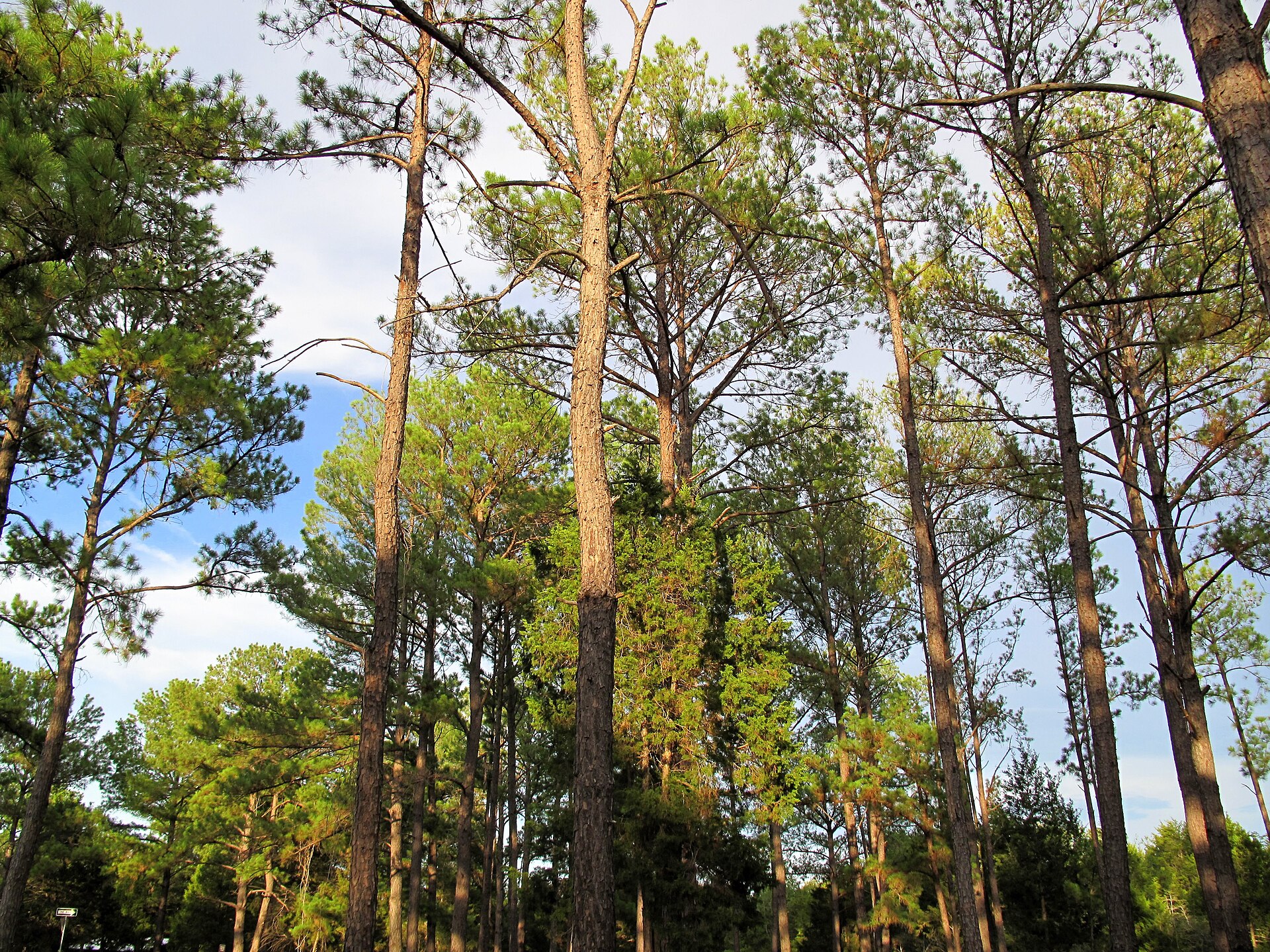
Drive anywhere in metro Atlanta and you’re looking at loblolly pines. They’re the most common pine across the Southeast, including Georgia. They line highways, fill in empty lots and tower over backyards in nearly every Gwinnett neighborhood. They’re also the tree we get called about most after a storm.
Here’s how to identify a loblolly pine, how big they get, what threatens them and when one is too risky to keep near your home.
How to Identify a Loblolly Pine
- Needles: 6 to 9 inches long, usually in bundles of three (sometimes two)
- Cones: 3 to 6 inches long, often in pairs, with very sharp spines on the scales. They can hang on the tree for several years.
- Bark: dark and scaly on young trees, becoming thick, reddish-brown plates as the tree ages
- Shape: a tall, straight trunk with most of the branches high up, especially on trees that grew in a crowded stand
Loblolly vs. longleaf vs. shortleaf pine
All three grow in Georgia, but loblolly is the one you’ll see most around Atlanta. Longleaf pines have much longer needles, often more than a foot long, and big cones. Shortleaf pines have short needles, about 3 to 5 inches, usually in bundles of two or three, and small cones. If the needles are mid-length and come in threes, and the cones bite your hand, it’s almost certainly a loblolly. Our guide to pine trees in Atlanta covers the other common species.
How Big Do Loblolly Pines Get?
According to the University of Florida’s tree fact sheet, loblolly pines usually grow 50 to 80 feet tall with a 30- to 35-foot spread, and they’re capable of reaching more than 150 feet. UF describes the loblolly as extremely fast-growing. That’s great for timber, but it also means a pine that was planted near a house 25 years ago may now be taller than the house is wide.
Common Loblolly Pine Problems
Bark beetles
Southern pine beetles and Ips engraver beetles are the biggest threats to loblolly pines in Georgia. They attack stressed trees, and once a tree is heavily infested, it usually can’t be saved. The USDA Forest Service’s 2025 Forest Health Highlights for Georgia reported 502 southern pine beetle spots statewide, mostly in loblolly pine stands, and a sharp increase in Ips beetle activity in areas hit by Hurricane Helene. Signs include small pitch tubes on the bark, fine sawdust in bark crevices and needles fading from green to yellow to red.
Storm breakage and uprooting
UF’s fact sheet lists the loblolly as susceptible to breakage. Tall pines with most of their weight at the top act like a sail in high winds. After a lot of rain, saturated soil can let them uproot entirely.
Surface roots
Loblolly pines can form large surface roots that lift walkways and make mowing a challenge.
Disease and lightning
Fusiform rust can cause swollen cankers on branches and trunks, and heart rot can weaken older trees from the inside. Lightning is also a common killer. Tall pines are often the highest point around, and a struck pine may die weeks later as beetles move in.
Signs Your Loblolly Pine Needs Attention
- Needles turning yellow, then reddish-brown, especially starting at the top
- Small globs of pitch (pitch tubes) or fine sawdust on the trunk
- A long strip of missing bark or a scar running down the trunk, which can mean a lightning strike
- A new lean or cracked, heaving soil at the base
- Large dead limbs or a dead top
Beetles can spread from one pine to the next, so if one tree in a group is dying, have the others checked too. Our post on how to tell if a tree is dead has more on what to look for.
When Should You Remove a Loblolly Pine?
A healthy loblolly with enough room is a fine tree to keep. Removal makes sense when:
- The tree is dead, dying or infested with beetles
- It’s tall enough to hit the house, and it’s leaning or has been damaged
- It was struck by lightning
- Its roots were damaged by construction, which often leads to decline a few years later
Taking down a tall pine near a house is usually done in sections, with each piece lowered by rope or crane. See our tree removal services and tree removal cost guide for more, and plan for stump grinding afterward.
Loblolly Pine FAQs
How tall do loblolly pines get?
According to the University of Florida’s fact sheet, loblolly pines usually reach 50 to 80 feet, and they’re capable of growing more than 150 feet tall.
How fast do loblolly pines grow?
Very fast. UF describes the loblolly as extremely fast-growing, which is why it’s planted so widely for timber and why a small yard tree can turn into a giant in a couple of decades.
How do I tell a loblolly from a longleaf pine?
Loblolly needles are 6 to 9 inches long, usually in bundles of three, and its cones are 3 to 6 inches with sharp spines. Longleaf pine needles are much longer, often over a foot, and its cones are bigger.
Are loblolly pines dangerous near houses?
They can be. Loblolly pines are susceptible to breakage, grow very tall on a fairly narrow crown, and can form large surface roots. Tall pines close to a home are worth having inspected, especially after storms or drought.
What kills loblolly pines?
Bark beetles, including southern pine beetle and Ips engraver beetles, are the most serious threats. Lightning strikes, drought stress, root damage and storms also kill or weaken loblolly pines.
Need Help With a Tree in Your Yard?
Avalon Tree Services is based in Lilburn and works throughout Gwinnett County and metro Atlanta. If you’re not sure whether a tree should stay or go, we’ll come take a look and give you an honest answer. Contact us or call 770-415-8581 for a free estimate.
Seeing pitch tubes or fading needles? Read our guide to pine beetles in Georgia.

Jose Roman is the owner of Avalon Tree Services and a member of the Georgia Green Industry Association (GGIA member #68916703). He leads the crews behind every tree removal, pruning job and storm cleanup we do across Gwinnett County and metro Atlanta, working out of our home base in Lilburn. Jose reviews the advice on this site so it lines up with what we actually see in Georgia yards: tall loblolly pines, aging water oaks and red clay that turns to mud after a week of rain.