Willow Oak Tree Guide: Identification, Growth & Care
Willow oaks are one of the most popular shade and street trees in the South, and metro Atlanta is full of them. They’re fast-growing, they handle tough city conditions better than many oaks and they give a lot of shade. But they get very big, and that’s where most of the problems we see come from.
Here’s how to identify a willow oak, what to expect as it grows and how to keep one healthy in your yard.
How to Identify a Willow Oak
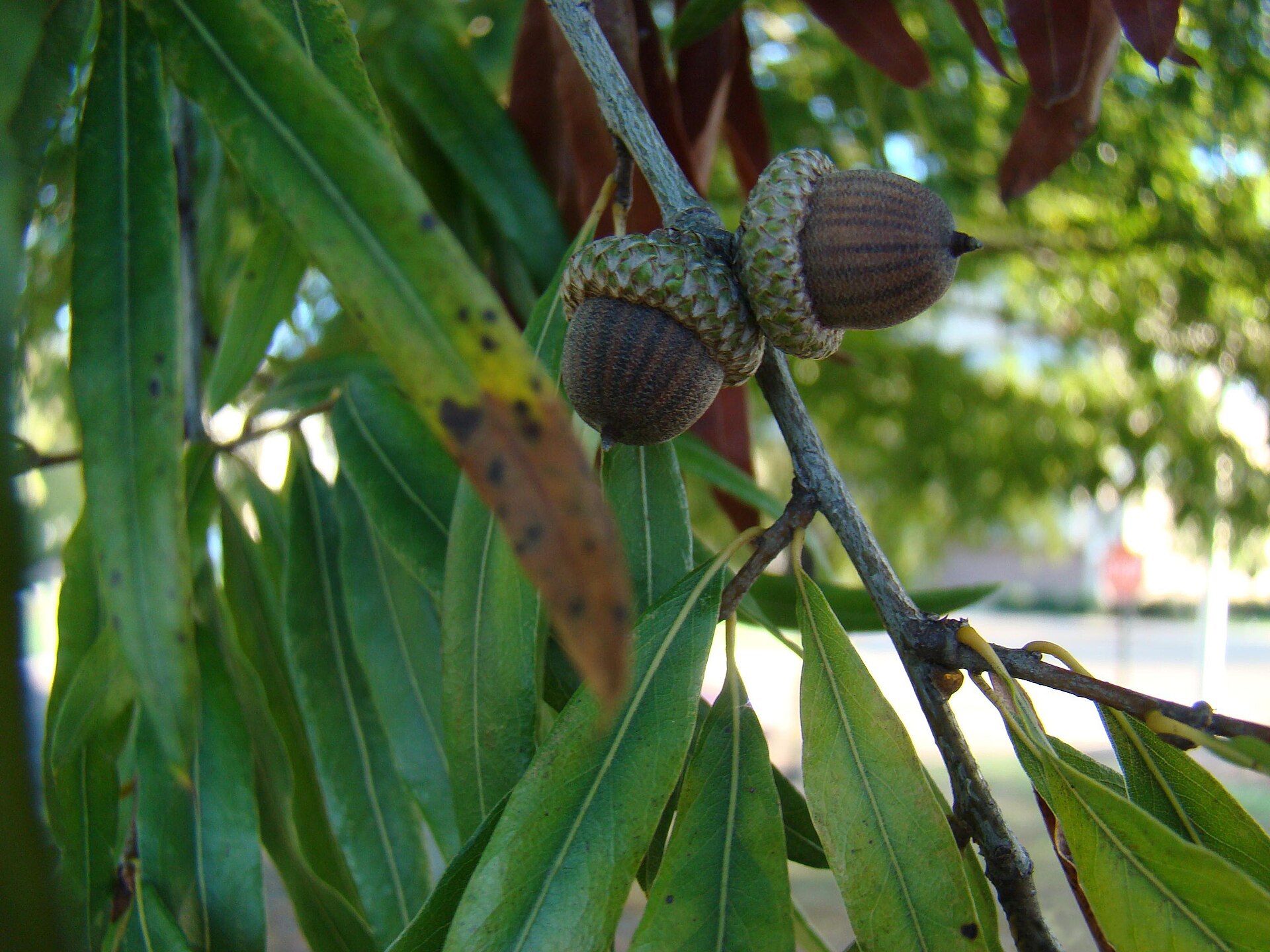
- Leaves: long, narrow and smooth-edged, a lot like a willow’s. That’s where the name comes from. The USDA describes them as light green and shiny on top and paler underneath.
- Acorns: small and round with a shallow, saucer-shaped cap. Trees usually start producing acorns at about 15 to 20 years old.
- Bark: dark and irregularly furrowed on older trees
- Shape: an oval to rounded crown with fine-textured foliage
- Fall color: usually yellow to bronze
Willow oak vs. water oak
These two get mixed up a lot because they’re both red oaks that grow all over Georgia. The easiest tell is the leaf: willow oak leaves are long and narrow from end to end, while water oak leaves are wider at the tip and shaped more like a spatula. That distinction matters, because water oaks are much shorter-lived and more prone to decay.
How Big and How Fast Do Willow Oaks Grow?
According to the USDA, willow oaks can grow over 100 feet tall with trunks 3 to 6 feet across. Clemson’s native plant guide describes the growth as rapid, about 25 feet in 12 years. In a typical yard, a willow oak will quickly become one of the biggest trees around, so it needs plenty of room away from the house.
Common Willow Oak Problems
- Size: the most common issue we see is a willow oak planted or left too close to a house, driveway or power line
- Wind damage: Clemson notes willow oaks can be susceptible to wind damage, so large limbs over the house should be watched
- Root rot and decay: shoestring root rot and canker can affect stressed trees
- Borers: the USDA lists trunk borers such as the red oak borer and carpenterworm, which mostly go after stressed or wounded trees
- Construction damage: like other oaks, willow oaks often decline a few years after their roots are cut or compacted by construction
Caring for a Willow Oak
A healthy willow oak doesn’t need much. Water young trees during dry spells, keep mulch a few inches away from the trunk, and protect the root zone from heavy equipment and new paving. Prune in late winter to remove dead wood, lift low limbs and correct weak structure while the tree is young. Our guide to when to trim oak trees in Georgia covers timing and technique.
When to Call a Professional
Have a willow oak looked at if you see large dead limbs, mushrooms or conks at the base, cracks or cavities in the trunk, a new lean, or thinning leaves at the top. For routine care, see our tree trimming services and tree trimming cost guide. If the tree is declining or simply too close to the house, see our tree removal services.
Willow Oak FAQs
How tall does a willow oak get?
Willow oaks can grow over 100 feet tall in the right conditions, with trunks 3 to 6 feet across, according to the USDA. In yards they’re usually smaller, but they still become large shade trees.
How fast do willow oaks grow?
Fast for an oak. Clemson’s native plant guide notes a willow oak can grow about 25 feet in 12 years.
What’s the difference between a willow oak and a water oak?
Both are common red oaks in Georgia. Willow oak leaves are long, narrow and smooth-edged, like a willow’s. Water oak leaves are wider at the tip and shaped more like a spatula.
Are willow oak acorns bad for pets or horses?
Clemson lists willow oak as toxic to horses. Oak acorns in general can upset dogs’ stomachs, so it’s best to keep pets from eating them.
When should I prune a willow oak?
Late in the dormant season, in late winter, is best. Avoid pruning while the new leaves are coming out in spring, and remove dead or broken limbs whenever you find them.
Need Help With a Tree in Your Yard?
Avalon Tree Services is based in Lilburn and works throughout Gwinnett County and metro Atlanta. If you’re not sure whether a tree should stay or go, we’ll come take a look and give you an honest answer. Contact us or call 770-415-8581 for a free estimate.
Jose Roman is the owner of Avalon Tree Services and a member of the Georgia Green Industry Association (GGIA member #68916703). He leads the crews behind every tree removal, pruning job and storm cleanup we do across Gwinnett County and metro Atlanta, working out of our home base in Lilburn. Jose reviews the advice on this site so it lines up with what we actually see in Georgia yards: tall loblolly pines, aging water oaks and red clay that turns to mud after a week of rain.