Water Oak Trees: Lifespan, Problems & When to Remove One
If you live in an older Atlanta or Gwinnett neighborhood, there’s a good chance a water oak is shading your house right now. Water oaks grow fast, they’re tough when young and they were left standing in a lot of subdivisions as the area grew. The catch is that they don’t live as long as most oaks, and when they start to decline, they tend to drop big limbs or fail outright.
Here’s how to identify a water oak, what goes wrong with them as they age and when it’s time to think about removal.
How to Identify a Water Oak
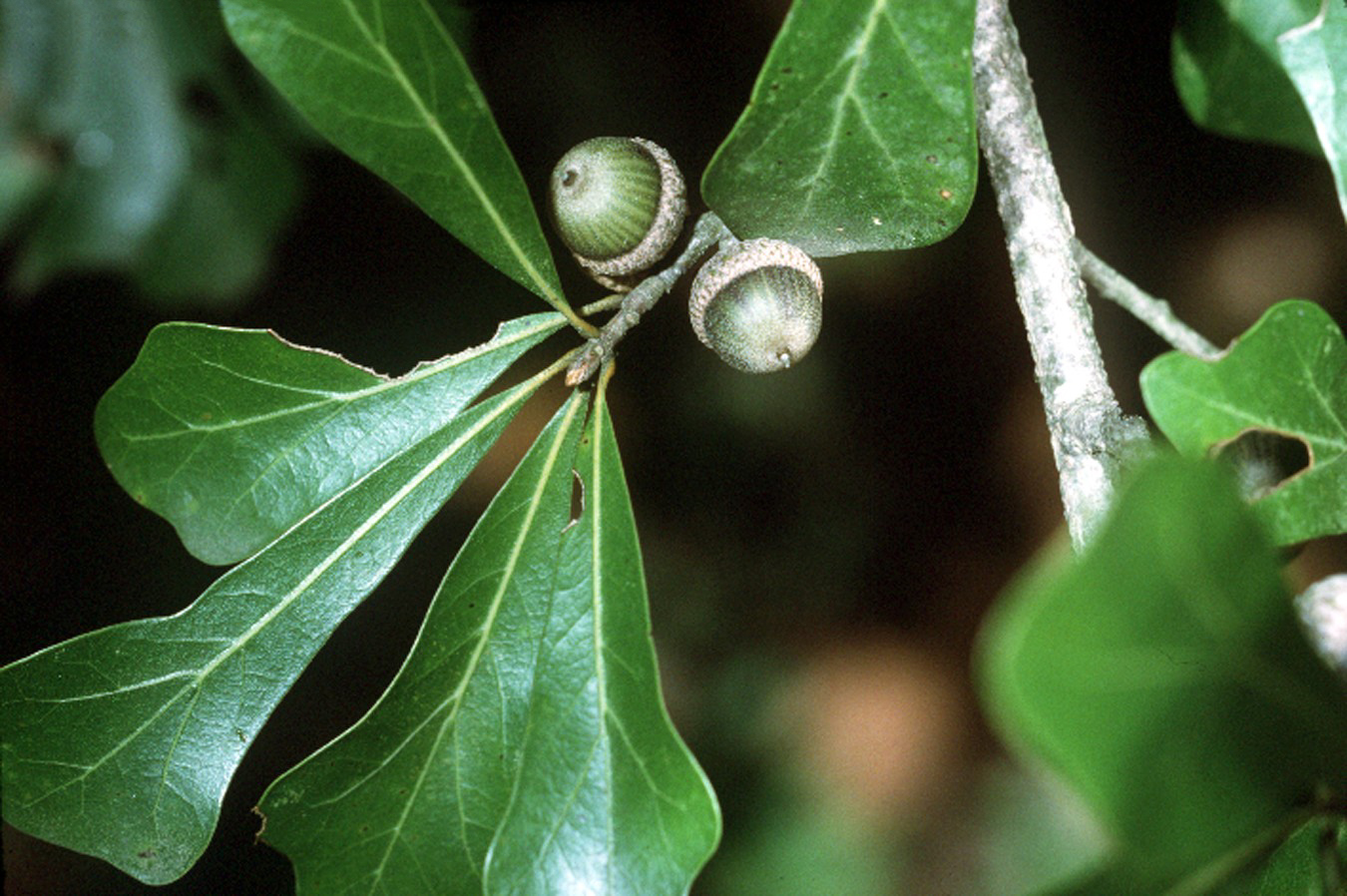
- Leaves: small for an oak, about 2 to 4 inches long, usually shaped like a spatula, broad and rounded at the tip and narrow at the base. Some leaves on the same tree may have a few shallow lobes.
- Leaf drop: water oaks hold many of their leaves well into winter, so they can look half-green when other trees are bare.
- Acorns: small, about half an inch, with a shallow cap.
- Size: commonly 50 to 80 feet tall with a wide, rounded crown.
How Long Do Water Oaks Live?
This is the big one. Water oaks are short-lived compared with other oaks. The University of Florida’s tree fact sheet describes a “relatively short life span” of about 30 to 50 years on some sites, and other references put it at 60 to 80 years. Compare that with white oaks, which commonly live well over a century.
In practical terms, many water oaks around Atlanta were mature trees when neighborhoods were built in the 1970s, ’80s and ’90s. A lot of them are now reaching the end of their lifespan.
Common Water Oak Problems
Weak wood and limb breakage
Water oak wood is weak and prone to breakage. Trees that grow in the open often have several upright trunks that are poorly attached, and limbs can split off in windstorms. UF’s fact sheet notes the tree “tends to break apart” as it reaches a large size.
Trunk decay and root rot
Mushroom root rot and trunk decay are the most serious problems for water oaks. Decay often starts inside the tree, so a water oak can look healthy from the ground while the trunk or roots are rotting. Shoestring root rot attacks the roots and has no practical cure.
Boring insects
Borers mainly go after weakened or stressed trees, especially trees whose roots were damaged during construction, like a new driveway, addition or trench for utilities.
Warning Signs Your Water Oak Is Failing
- Mushrooms, conks or shelf fungi at the base of the tree or on the trunk
- Large dead limbs in the canopy, or limbs that have already fallen
- Thinning leaves or dieback at the top of the tree
- Cracks, cavities or soft, crumbly wood in the trunk
- A new lean, or soil heaving up on one side of the base
- Bark falling off in patches
If you’re seeing any of these, especially on a tree near the house, have it checked. Our post on when a leaning tree is a problem and our guide to how to tell if a tree is dead cover more of what to look for.
Should You Remove Your Water Oak?
A younger, healthy water oak in an open part of the yard can be worth keeping, with regular pruning to remove dead wood and reduce heavy limbs. Removal makes more sense when:
- The tree shows decay, fungus or large dead limbs
- It’s close enough to hit the house, driveway or a neighbor’s property
- It’s an older tree that’s started to decline
- Its roots were damaged by construction in the past few years
Because water oaks fail from the inside, an inspection is often the best first step. For trees that need to come down, see our tree removal services and tree removal cost guide.
What to Plant Instead
If you’re replacing a water oak, consider a longer-lived oak like a white oak or willow oak, planted well away from the house. Ask your local nursery or the UGA Extension office for trees that fit your space.
Water Oak FAQs
How long do water oaks live?
Water oaks are short-lived for oaks. Estimates range from about 30 to 50 years on some sites to 60 to 80 years, which is far shorter than white oaks and other long-lived oaks.
How can I tell if my water oak is rotting?
Watch for mushrooms or conks growing at the base or on the trunk, hollow or soft spots, cracks, large dead limbs, and thinning leaves at the top of the crown. Any of these is a reason to have the tree inspected.
Are water oaks evergreen?
Not quite. Water oaks are tardily deciduous, which means they hold onto many of their leaves until mid-winter before dropping them.
Is a water oak a good tree to plant near a house?
Usually not. Water oaks grow fast, get big and have weak wood that’s prone to breakage, so they’re a better fit for open areas well away from homes.
Can a declining water oak be saved?
Sometimes, if the problem is caught early and the decay is limited. Once there’s significant trunk or root decay, removal is usually the safer choice.
Need Help With a Tree in Your Yard?
Avalon Tree Services is based in Lilburn and works throughout Gwinnett County and metro Atlanta. If you’re not sure whether a tree should stay or go, we’ll come take a look and give you an honest answer. Contact us or call 770-415-8581 for a free estimate.
Keeping your water oak? Here’s when and how to trim oak trees in Georgia.
Not sure if it’s a water oak? Compare it with our willow oak guide.

Jose Roman is the owner of Avalon Tree Services and a member of the Georgia Green Industry Association (GGIA member #68916703). He leads the crews behind every tree removal, pruning job and storm cleanup we do across Gwinnett County and metro Atlanta, working out of our home base in Lilburn. Jose reviews the advice on this site so it lines up with what we actually see in Georgia yards: tall loblolly pines, aging water oaks and red clay that turns to mud after a week of rain.